Are you Addicted to your Own Chaos?
Lying here in the muted candle light, the sound of Josh writing a song on our electric stage piano has a tranquil, sedating effect. I feel mildly euphoric, despite having a wicked migraine. It’s noteworthy to add that I haven’t had a migraine in many weeks. I became my own lab rat when I experimented with a variety of medicinal, herbal, natural pain modifiers and thankfully, discovered something that worked for me. It’s such an effective medicine, that it not only eliminated my 3 day migraines altogether, but doubled as natural Adderall; increasing my ability to focus and concentrate by more than 60%. As a result, my grades shot up and I became an honor roll student virtually overnight. And, as a result of the medicine, I’ve been able to eliminate my doctor visits 100%. No need for pharmaceutical pain medication, no need for nerve pills, no need for Ambien to help me sleep. It’s been my panacea and it works. (Unfortunately, I’ve been without that medicine for 3 weeks now.)
I realize finding a cure-all on this level is slim to none. Even doctors and therapists are unable to “fix” people for the most part. Why else do people continue seeing a therapist after 20 years and so on? You’d think that there’d be nothing left to discuss. Ahh…but what they don’t and won’t tell you, is that they will help you to perpetuate your own disorder; it’s called job security.
You would think that I, of all people– a psychologist-in-training– would be hesitant to talk openly about this seldom-disclosed medical deception, but I’m not. Because it’s disgusting how Big Pharma and (many) doctors and therapists are all in bed together, and they work incessantly to keep people sick- year after year- and benefit from it.
Disclaimer: there are people who genuinely need therapy and benefit from it, and absolutely should continue on with it and take the proper medications. I’m not talking about those people.
I’m talking more about people that really don’t need medication or therapy at all…like children who are excitable, and are simply being children. They wiggle in their seats with anticipation and raw energy. But do you know what the teachers are doing in most all schools now? They’re being conditioned and programmed–like militants–to report ANY children who exhibit signs of “excitability”, and they’re mandated to report these “excitable children” to school officials, CPS workers, CASA workers (who are merely average Joes and Janes who volunteer to work with children, despite their lack of any kind of training whatsoever- scary), and a plethora of other workers.
What happens next is nothing short of societal rape. They then tell the parents that their child needs to be medicated, because he or she is exhibiting signs of ADHD- which is a “catch-all disorder” for a child simply being a child! Big Pharma has created this disorder in the last 20 years or so, and has pimped it out to society at large, and the whole world has swallowed it up- tail and all- because they’re told it’s true.
This is scary crap. For real.
School teachers- who have absolutely no psychological training whatsoever, are reporting children to case workers, who then report those children to “other officials”- who in turn, report them to CPS- the baby snatchers and the family destroyers. Why? Why would they do such a thing?
I’ll tell you why. Because every child in the public school system who is put on some type of behavioral disorder medicine receives bonus money for that school. For every kid that’s diagnosed–by a freakin’ teacher–and reported- the school’s bankroll gets fatter. And now that school district has a sweet chunk o’ change rolling in, no matter where that kid goes (as long as he’s medicated and the “problem” persists- and oh believe me, it will) and that kid becomes a “lifer” most of the time. Meaning, that child will be told it needs medicine year after year, for many years, and sometimes it lasts for the rest of their lives. Because after 10- 20 years of pharmaceutical medications, a host of side effects and other disorders have now been created (and are real), because of that one prescribed medication during the child’s most formidable, impressionable years.
Look it up. Knowledge is power, they say. Kids are being altogether destroyed at an alarming rate in the U.S. and parents are frightened into obeying, because they’e told that their child has “a disorder”. They’re threatened if they don’t take their kid to a therapist and worse, they’e threatened if they refuse to medicate their child.
This is a sick, twisted business. It’s absolutely horrific and yet it continues on, year after year.
I watched this documentary called The Drugging of Our Children and it blew my head off. Seriously. It scared the crap out of me. I could not believe that our system is that perverted. Well, yes I can, but don’t get me started on that.
Alas. I really didn’t want to rant on about all of that. This is just free association.
I really wanted to write about something else entirely. My migraine, and pain in general. I’ve noticed that when I’m in extreme pain, especially for 72 hours relentlessly, that any little comfort feels reeeeeeeeeally good. Way better than normal. Take for example, stretching my muscles. By nature, I really can’t stand to work out. It’s boring and repetitive and sort of pointless to me. I can think of many fun ways to get exercise, rather than spin around on a wheel like a sad hamster.
But a few moments ago, I noticed that when I stretched my leg muscle, it felt incredibly good. More so than if I didn’t have a migraine and it got me thinking: What’s the correlation between pain and good feelings? Is it possible that pain actually releases endorphins?
And then I found this article that stated that not only pain releases feely-good endorphins, but so does stress. Hold on- let that sink in a minute.
Stress (chaos, worry, contention, strife, bad traffic, an ugly altercation, hard donuts, etc.) releases endorphins. A while back, I wrote a post about a theory that I posited, called The Chaos Theory. There’s already a chaos theory in math, but not in psychology. Well, now there is. 🙂
My theory is this: In childhood and adolescence, some of us are thrown into derision and pain, or, chaos, and not unlike adaptation, we get used to crazy crap happening to us all of the time. (Sorry, I get tired of writing academic research sometimes and my rebellion is being able to dumb it down- teetering dangerously on the edge of slang.) In short, if the chaos ceases for any length of time outside of what we’re familiar with, we’ll create our own chaos, because then, at least we know what to expect.
In this way, we condone and accept self-induced chaos more readily than foreign peace.
Heavy words, but not untrue. As with anything else, each person’s experience will vary, and this hypothetical scenario is individuated and subjective. In other words, it’s not the same for everybody.
In the article I pointed out up there, it states that our stress and pain activate our opioid receptors; very much like drugs do. However, it stated that we do not become addicted to pain and stress as we would with drugs.
I beg to differ.
And I bring your attention back to my Chaos Theory. I believe some of us seek out chaos, not because we like it, but because we’re trying to alter our brain chemistry. Stress produces endorphins! When we experience prolonged stress, our brain dispatches the EMT/ambulance (little neurotransmitters- endorphins) to patch up the damage. This is likened to taking a hit off of an opium pipe. Not enough to knock you down, no, and maybe not enough to even notice- on a conscious level.
But what’s happening behind the scenes is that as the stress is increasing, and the sympathetic nervous system throws the body into “fight or flight” mode, our endorphins are being pumped out from the pituitary gland and are circulated throughout the body via the bloodstream, certain neural pathways in our brain are being rewarded with those feely-good hormones. It’s very much like biological classical conditioning.
This is bad though, because it teaches the person that “heightened stress” is rewarded.
[Another “let that sink in” moment.]
In this way, we absolutely can, and sometimes do become addicted to stress, and our own chaos- because it’s what we’ve learned to do in order to “fix ourselves”- not unlike a junkie.
I’d like to conduct a few research studies in the future in this area. But for now, I’m going to get my own fix; listening to Josh play and sing, as I lay here in the candle’s warm glow with the smell of pumpkin spice filling up the room sweetly.
Interestingly enough, my migraine has dissipated almost entirely.
Let’s Talk about Sexual Abuse and “Mental Illness”

There are two words that bother me greatly when I see, hear, or read them. They are: “Mental Illness”. Why does this wildly popular and acceptable term bother me so much? I’ll elaborate.
Quite a few of my friends are “mentally ill” at their own admittance, and those that aren’t, continue to use the phrase easily and without conviction. It’s just what people are known to be that have “mental problems”, right?
But who doesn’t have “mental problems”? Who hasn’t at some point broken down and cried? Who hasn’t felt afflicted spiritually, emotionally, psychologically, financially, health-wise or otherwise? How did it affect you as person? Did you feel defeated? Did you feel like giving up? Did you fret? Worry? Call people? Overeat? Not leave your house for the day? The week? Pace your floors? Cuss? Scream? Throw something? Drink? Drink more? (See where this is going?)
How do we differentiate between a person who is exhibiting (fatigue, duress, insomnia, depression and other) physiological manifestations -very natural responses to his or her sexual abuse or other traumas- combined with their chaotic environments, and a person who is exhibiting these signs when everything is hunky-dory?
One would be classified as appropriate behaviors given the circumstances, and the other would be classified as exhibiting psychological disorders. Both examples describe the same behaviors! But the environmental norms surrounding them separate the two.

If a person has been sexually abused and placed in a normal environment with siblings and other happy folks who have a swell life, there is no way the sexually abused person is going to behave in an expected manner. Who would behave at optimal performance in school, church, family gatherings, etc. after being sexually abused and having to “guard it” like Fort Knox gold? A person who tries to keep it together year after year will eventually break down while trying to process massive amounts of: guilt, anxiety, shame, anger, rage, confusion, blame, self-loathing, envy- the list is very long.
Given the circumstances, it’s actually very normal behavior to exhibit signs of distress, anxiety, anger, OCD-like tendencies, insomnia, night terrors, and other maladaptive behaviors that are associated with trauma. People who have not suffered these traumas do not understand and it is extremely unsettling for them that they do not have answers that they can file away, shelve, and dress up with a tidy bow so that it’s sorted out in their heads.
But there needs to be an understanding in this area that these odd behaviors are very normal for sexual abuse survivors. What wouldn’t be normal is having suffered sexual abuse (especially as a child) and then sailing through life with little or no behavioral quirks. I dislike the word disorder because I challenge anybody to say that surviving sexual abuse is a disorder.
It is a triumph. Sexual abuse is a violation like no other and people give medals to those in wars who have been violated less and call them heroes. Sexual abuse survivors fight in the battlefields of life, and there’s no hero’s welcome. There’s no parade. No medals. We have to be our own heroes and rescue ourselves from the collective trenches of societal stigma and hate bombs that others throw at us and that we throw at ourselves.
Being a sexual abuse survivor is like being locked in a dark, dirty cell and given 5,000 keys: Only one will unlock the door, and you have one hour to find the right one, or you could die! Doom. Doom doom doom! And lots of crying, worry, and fears that you will never find the right key in time.
But again, I reiterate that these horrible feelings are absolutely normal given the circumstances. We need to carefully select the words and labels we assign to people who have suffered such traumas. What if they believe you?!
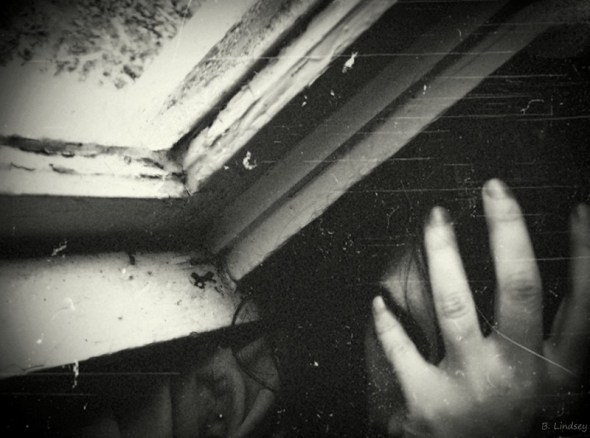
God forbid I ever believe any labels that have been placed upon me in life. I would be the biggest mess in the world. But I have assigned healthier labels for myself: loving, compassionate, real, honest, valuable, happy. After all, I am the one who has to live with myself and why would I want to live with a pessimist?
The term mental illness came about in the 1800’s after various psychological perspectives disagreed on what actually defined a person to be mentally ill. Some believed that it was evil spirits. Some believed it was “psychogenic”, or psychologically induced, and others believed that it was somatogenic, or “of a biophysiological nature” (that’s a fancy way of saying “relating to your body” rather than your mental processes).
They locked “mentally ill” people up on psych wards and in chains where they were beaten and starved, or placed in a metal contraption that rendered them motionless for hours and days at a time. When the patients in these asylums exhibited paranoia, fear, depression, sleeplessness, excessive anxiety and other abuse-related behaviors (as a direct result of the abuse), their friends and families sadly accepted what the doctors had prescribed them all: mental illness.
Many of these patients were exhibiting very normal responses to being held against their wills and physically and psychologically abused. People were quick to swallow the ideology of “mental illness” because it satisfied their need to classify and understand what was happening to their family member.
In other words, people created the term “mental illness” to be able to better control individuals, societies, groups, and religious wars were often the fuel that kept these controversial fires burning. With the classification of mental illness, the acts of physical and emotional abuse on those who broke society’s norms were not only unpunishable; but sanctioned, approved, and rewarded!
Just as toxic as any sexual abuse is the belief by the victim that he or she is mentally ill, because somebody said so. This is such a powerful weapon of self-destruction, and only the act of sexual abuse itself is stronger.
We need to start tossing out terms like “mental illness”: those two words alone are TOXIC. I will never accept terms like “mental illness” and “psychological disorder”. Those are conceptual words made up by people who do not understand what it is like to live in a world with wild, technicolor vision. How about that?

How about, “I have a family member or friend who has really been through it, but they have still been able to [insert accomplishments here] despite their setbacks.”
It’s all about perception and presentation, and I think we owe one another a sum of decency as to how we present each other.
I wrote this post so that other sexual abuse survivors might gather strength and comfort. Know that there are others who have suffered the same things in life, but refuse to be labeled! You are who and what you believe you are.
You have to believe yourself into something positive, constructive, hopeful– and be fearless in your conquests! Be bold in who you are, and acknowledge that you are a survivor rather than a victim. And when you learn that, teach others that too. Choose positivity rather than negativity.
Those 5,000 keys?
They all open the door.


 m o n o c h r o m e j u n k i e †